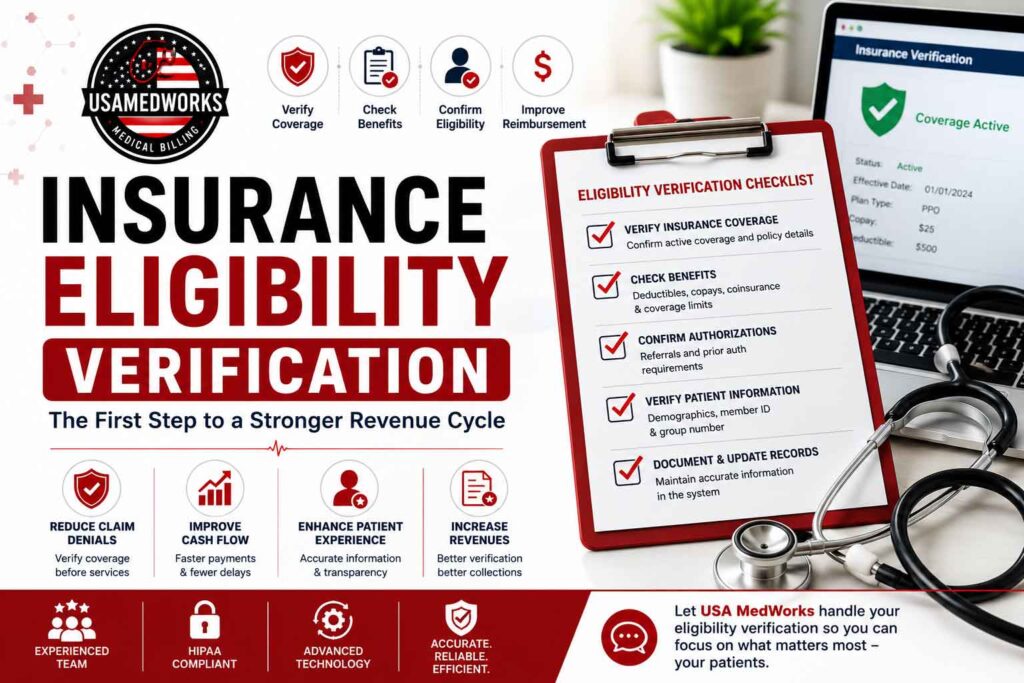
Insurance eligibility verification is one of the most important steps in the healthcare revenue cycle management (RCM) process. Verifying a patient’s insurance coverage before services are rendered helps healthcare providers reduce claim denials, improve reimbursement rates, enhance patient satisfaction, and maintain healthy cash flow.
Unfortunately, many healthcare organizations still struggle with eligibility-related claim denials. Incorrect insurance information, inactive coverage, missing authorizations, and benefit verification errors can result in delayed payments and increased administrative costs.
This comprehensive guide explains everything healthcare providers need to know about insurance eligibility verification, including best practices, common challenges, denial prevention strategies, payer requirements, and how professional medical billing services can streamline the process.
What Is Insurance Eligibility Verification?
Insurance eligibility verification is the process of confirming a patient’s active insurance coverage, benefits, copayments, deductibles, coinsurance responsibilities, and authorization requirements before healthcare services are provided.
The goal is to ensure that:
- The patient’s insurance policy is active.
- The planned medical service is covered.
- Referral or authorization requirements are met.
- Patient financial responsibility is identified.
- Claims are submitted accurately.
Insurance verification is often considered the first line of defense against preventable claim denials.
Why Insurance Eligibility Verification Matters
Healthcare organizations lose millions of dollars annually due to avoidable claim denials. One of the most common causes of denied claims is eligibility-related errors.
Proper insurance eligibility verification helps providers:
- Reduce claim denials
- Improve clean claim rates
- Increase reimbursement speed
- Improve patient collections
- Enhance revenue cycle management performance
- Reduce accounts receivable days
- Improve patient experience
When eligibility verification is performed correctly, healthcare providers can focus on delivering quality care instead of managing billing issues.
Information Verified During Eligibility Checks
A complete insurance verification process should confirm several important data points.
| Verification Item | Purpose |
|---|---|
| Insurance Coverage Status | Confirms active policy |
| Policy Effective Dates | Ensures coverage period is valid |
| Deductibles | Determines patient responsibility |
| Copays | Identifies point-of-service collection amounts |
| Coinsurance | Calculates patient financial obligations |
| Referral Requirements | Avoids authorization denials |
| Prior Authorization Requirements | Prevents service denials |
| Coverage Limitations | Identifies non-covered services |
Common Insurance Eligibility Verification Errors
Even small verification mistakes can result in claim rejections and payment delays.
Common eligibility verification errors include:
- Incorrect member ID numbers
- Outdated insurance information
- Failure to verify secondary insurance
- Missing prior authorization requirements
- Coverage termination not identified
- Incorrect payer selection
- Incomplete patient demographics
These errors often lead to avoidable revenue cycle disruptions and increased administrative costs.
How Eligibility Verification Impacts Revenue Cycle Management
Insurance eligibility verification directly affects every stage of the revenue cycle.
Accurate verification improves:
- Patient registration accuracy
- Clean claim submission rates
- Payment posting efficiency
- Accounts receivable performance
- Denial management outcomes
- Overall practice profitability
Healthcare organizations that invest in eligibility verification often experience significant reductions in claim denial rates and faster reimbursement cycles.
Top Reasons Claims Are Denied Due to Eligibility Issues
| Denial Reason | Description |
|---|---|
| Inactive Coverage | Insurance policy terminated |
| Coverage Not Effective | Policy not active on service date |
| Authorization Missing | Required approval not obtained |
| Non-Covered Service | Benefit limitation applies |
| Incorrect Subscriber Information | Member data mismatch |
| Coordination of Benefits Issues | Primary payer incorrect |
Insurance Eligibility Verification Checklist
Healthcare providers should follow a standardized verification workflow.
Before Patient Visit
- Verify insurance coverage
- Confirm patient demographics
- Review policy effective dates
- Check deductibles and copays
- Verify referral requirements
- Review authorization requirements
Day of Appointment
- Reconfirm coverage if needed
- Collect copays
- Update insurance information
- Verify identification documents
Prior to Claim Submission
- Validate payer information
- Confirm authorizations
- Review coverage limitations
- Ensure documentation supports billed services
Payer-Specific Eligibility Verification Tips
Medicare
- Verify Medicare eligibility before each visit.
- Review Medicare Advantage plans separately.
- Confirm secondary insurance coverage.
Medicaid
- Eligibility may change monthly.
- Check state-specific rules regularly.
- Verify managed care enrollment.
Commercial Insurance
- Review authorization requirements carefully.
- Confirm network participation status.
- Check specialty-specific coverage limitations.
Technology and Automated Eligibility Verification
Modern healthcare organizations increasingly rely on automated insurance eligibility verification tools.
Benefits include:
- Real-time eligibility checks
- Reduced manual workload
- Fewer registration errors
- Improved billing accuracy
- Faster patient check-in processes
Automation can significantly improve operational efficiency and revenue cycle performance.
Benefits of Outsourcing Insurance Eligibility Verification
Many healthcare organizations partner with professional medical billing companies to manage eligibility verification.
Outsourcing offers:
- Experienced verification specialists
- Improved clean claim rates
- Reduced denials
- Lower administrative burden
- Faster reimbursement cycles
- Enhanced patient experience
Professional verification teams stay current with payer policies and industry regulations.
Internal Resources
- Medical Billing Services
- Revenue Cycle Management Services
- Medical Billing and Coding Services
- Provider Credentialing Services
- Denial Management Services
Helpful External Resources
- Centers for Medicare & Medicaid Services (CMS)
- AAPC Medical Billing Resources
- American Medical Association (AMA)
- U.S. Department of Health & Human Services
Frequently Asked Questions
What is insurance eligibility verification?
Insurance eligibility verification is the process of confirming active insurance coverage, benefits, and authorization requirements before providing healthcare services.
Why is eligibility verification important?
It reduces claim denials, improves reimbursement accuracy, and strengthens healthcare revenue cycle management.
How often should eligibility be verified?
Eligibility should ideally be verified before every patient visit because coverage information can change frequently.
Can eligibility verification reduce denied claims?
Yes. Eligibility verification is one of the most effective ways to prevent avoidable claim denials and reimbursement delays.
Conclusion
Insurance eligibility verification is a foundational component of successful healthcare revenue cycle management. By confirming coverage, benefits, and authorization requirements before services are delivered, healthcare providers can significantly reduce claim denials, improve cash flow, and enhance patient satisfaction.
Implementing standardized eligibility verification workflows and leveraging professional medical billing expertise can help healthcare organizations maximize reimbursements while reducing administrative burdens.
USA MedWorks provides comprehensive medical billing, eligibility verification, denial management, and revenue cycle management solutions designed to help healthcare providers improve financial performance and focus on patient care.
Need Help Improving Insurance Eligibility Verification?
Contact USA MedWorks today to streamline your verification process, reduce denials, and improve revenue cycle performance.