Medical billing services work remotely now, so “near me” doesn’t mean the billing team has to be in the same building, or even the same state, as the practice. It usually means something more specific: does the billing partner know this state’s Medicaid managed care plans, its major regional payers, and its documentation or licensing quirks well enough to actually get claims paid. This guide covers what still matters about location when choosing a medical billing company, the questions worth asking before signing, and links to state-specific resources for practices researching a local option.
Key Takeaways
- The value of a “local” medical billing company today comes from payer familiarity, not office location: knowing a state’s Medicaid managed care organizations, regional Blues plans, and common local denial patterns.
- Time zone alignment still matters for phone support and patient billing questions, even when claims processing itself happens remotely.
- State Medicaid programs vary in prior authorization rules, timely filing windows, and documentation requirements, so multi-state practices benefit from a partner with experience across the specific states they operate in.
- Asking a prospective billing partner about their experience with a state’s top 3 to 5 payers by claim volume is a faster way to judge fit than asking about location alone.
What “Local” Actually Means in Medical Billing Today
A billing company doesn’t need a local address to serve a practice well, but it does need local payer knowledge. That means understanding the specific Medicaid managed care organizations active in the state, the regional Blue Cross Blue Shield plan’s quirks, and the denial patterns that show up more often in that state than nationally. A national billing partner with no state-specific experience can still get the codes right and still lose weeks to denials that a locally experienced partner would have avoided.
Questions to Ask Before Choosing a Medical Billing Partner
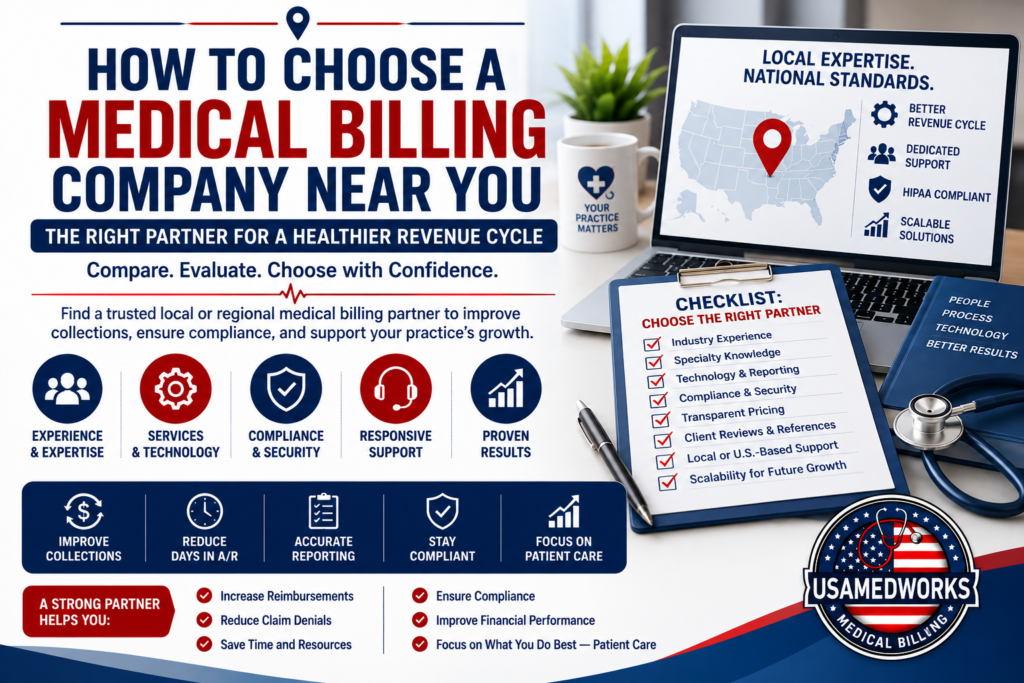
- Which payers in this state do you handle most often, and what is your clean claim rate with them?
- How do you handle this state’s Medicaid managed care plans specifically?
- What is your average time to resolve a denial, and do you track denial reasons by payer?
- How do you handle multi-state licensing or credentialing requirements if the practice sees patients across state lines?
- What reporting do we get, and how often?
Why State-Level Payer Knowledge Matters More Than Zip Code
Timely filing limits, prior authorization thresholds, and documentation standards can differ meaningfully from one state’s Medicaid program to another. A billing team that already knows those differences for a given state typically resolves claims faster than one learning the rules on a practice’s first denied batch. That state-level experience matters more to claim outcomes than whether the billing company’s office happens to be in the same city as the practice.
Medical Billing Companies by State
We work with practices across the country. Below are state-specific resources covering the payer landscape and billing considerations for each state:
- Medical Billing in Alabama
- Medical Billing in Arizona
- Medical Billing in California
- Medical Billing in Florida
- Medical Billing in Georgia
- Medical Billing in Illinois
- Medical Billing in Louisiana
- Medical Billing in Massachusetts
- Medical Billing in New Jersey
- Medical Billing in New York
- Medical Billing in North Carolina
- Medical Billing in Ohio
- Medical Billing in Pennsylvania
- Medical Billing in Texas
- Medical Billing in Virginia
- Medical Billing in Washington
Don’t see your state listed? Visit our Near Me hub or contact us directly, we work with practices nationwide regardless of location.
Frequently Asked Questions
Does a medical billing company need to be in the same state as my practice?
No. Claims processing happens remotely regardless of location. What matters is whether the billing company has direct experience with your state’s Medicaid program and major regional payers.
What should I ask a medical billing company about my state’s Medicaid program?
Ask which Medicaid managed care organizations they handle most often in your state, and what their clean claim rate looks like with those specific plans.
Does time zone matter when choosing a medical billing partner?
It matters for support availability. A billing partner whose support hours overlap with your practice’s hours makes it easier to resolve patient billing questions and urgent claim issues quickly.
How do multi-state practices handle billing across different states?
They typically work with a single billing partner experienced across all the states they operate in, rather than a separate vendor per state, so provider credentialing and payer rules stay consistent and centrally tracked.